







Road building, induced traffic and clean air along the A36 A350 corridor
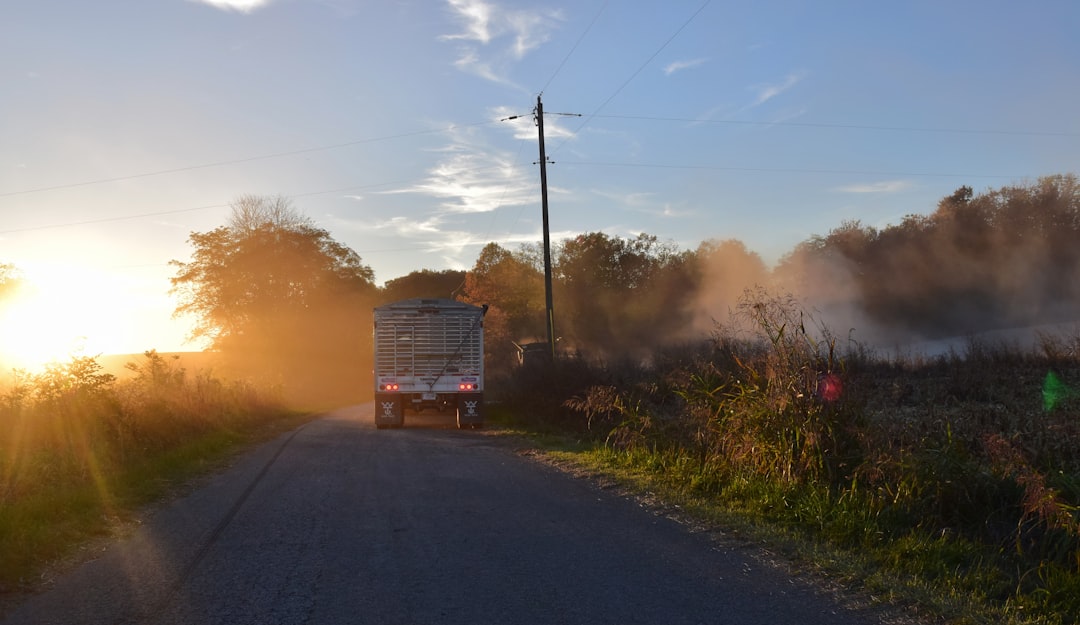
The A36/A350 corridor threads through rural communities, market towns and strategic links between regional centres. Je present here a balanced, evidence-informed look at how road building along that corridor can trigger induced traffic, influence air pollution, clash with climate policy, and shape rural mobility. Vous trouverez practical policy options and trade-offs designed to protect local air quality while improving access for people who depend on the corridor.
Context and transport dynamics along the A36/A350 corridor
Corridor role and rural connectivity
The A36/A350 functions as a lifeline for commuting, freight and local services in predominantly rural areas. Many villages rely on the corridor for access to jobs, hospitals and supply chains. Je stress that upgrades promise faster journeys and economic benefits—but those gains are not evenly distributed. Vous must weigh improved connectivity against environmental and social costs that often fall on communities adjacent to the road.
Current traffic patterns and pressures
Traffic mixes long-distance freight, interurban trips and short rural hops. Peak flows concentrate near towns and junctions, creating localised congestion and idling. Je note that capacity additions are often proposed to relieve these pinch points. However, without complementary measures, additional lanes can simply attract new trips and re-route traffic, shifting the problem rather than eliminating it.
Road building and induced traffic: mechanisms and evidence
How induced demand works
Induced demand arises when increased road capacity lowers generalized travel cost (time, reliability), prompting behavioural responses: existing drivers travel more, trip-makers switch modes from transit to car, and land-use changes generate new vehicle trips. Je emphasize that these dynamics unfold over months and years, so short-term congestion relief may be illusory.
Empirical findings relevant to rural corridors
Studies repeatedly show that capacity expansions capture a significant share of latent demand. Vous should expect traffic growth to partially or fully offset initial relief, especially where public transport and active travel remain limited. Rural corridors are vulnerable because car dependence is higher and alternatives are weaker.
Air pollution and health impacts adjacent to the corridor
Local air quality and pollutant sources
Vehicle emissions—particularly NOx, PM2.5 and ultrafine particles—are concentrated along busy roads. Upgrading the A36/A350 without demand controls can increase vehicle-kilometres travelled, worsening roadside pollution. Je highlight that diesel freight contributes disproportionately to NOx and particulates, so freight flows along the corridor matter greatly for local air quality.
Exposure, health and environmental justice
Children, older adults and those with respiratory conditions often live close to main roads in rural towns. Vous must recognise that poorer or more exposed communities may bear the health burden of increased emissions. Long-term exposure links to cardiovascular and pulmonary illnesses, and these externalities should be central to decision-making.
Climate policy, mitigation and contradictions
Why building roads can undermine climate goals
Expanding road capacity tends to increase transport CO2 through induced demand. Je point out the tension: national and regional climate commitments aim to reduce emissions, while road projects can lock in higher car dependency and carbon-intensive freight patterns for decades. Policy coherence is therefore essential.
Complementary policies and alternatives
To reconcile mobility and climate goals, vous should pair targeted infrastructure work with demand management, electrification, and modal investment. Improved bus services, park-and-ride, active travel routes and freight consolidation can reduce the carbon footprint of corridor upgrades. Land-use planning that promotes compact development near towns reduces trip lengths and supports low-carbon transport.
Solutions for cleaner air and better rural mobility
Sustainable upgrades and modal shift
Road projects that prioritise safety improvements, junction reconfiguration and public transport priority deliver value without incentivising unnecessary driving. Je recommend investing in high-frequency bus routes, secure cycle links and intermodal freight facilities to shift demand away from single-occupancy cars.
Demand management, land use and electrification
Congestion pricing, targeted low-emission zones in sensitive towns, and incentives for off-peak freight movement help manage demand. Electrification of fleets will reduce tailpipe pollution but does not erase congestion or induced traffic effects; EVs must be paired with smarter planning. Vous should also push for local planning policies that reduce sprawl and encourage walkable town centres.
- Assess projects against emissions and health impact criteria, not just travel time savings.
- Prioritise combined measures: modest capacity upgrades + robust public transport.
- Enforce vehicle emission standards, encourage freight consolidation and shift.
- Design active travel networks to connect villages to hubs safely.
- Use targeted demand management where local air quality and congestion are worst.
Policy recommendations for the A36/A350 corridor: balancing mobility, air quality and climate
Je conclude that building roads on the A36/A350 can deliver benefits, but induced demand and air pollution risks are real and measurable. Vous should insist on integrated appraisal: quantify likely traffic growth, model local pollutant impacts, and require mitigation packages before approving upgrades. Blend modest physical improvements with public transport investment, demand-side measures and land-use policies to protect public health and meet climate commitments. With careful design, the corridor can become safer, cleaner and more resilient—serving rural communities without compromising air quality or the planet.
Practitioners and community groups seeking practical case studies, governance models and resources on integrated corridor management and freight consolidation can consult corridor-alliance.co.uk, which complements the evidence-based measures outlined above.